
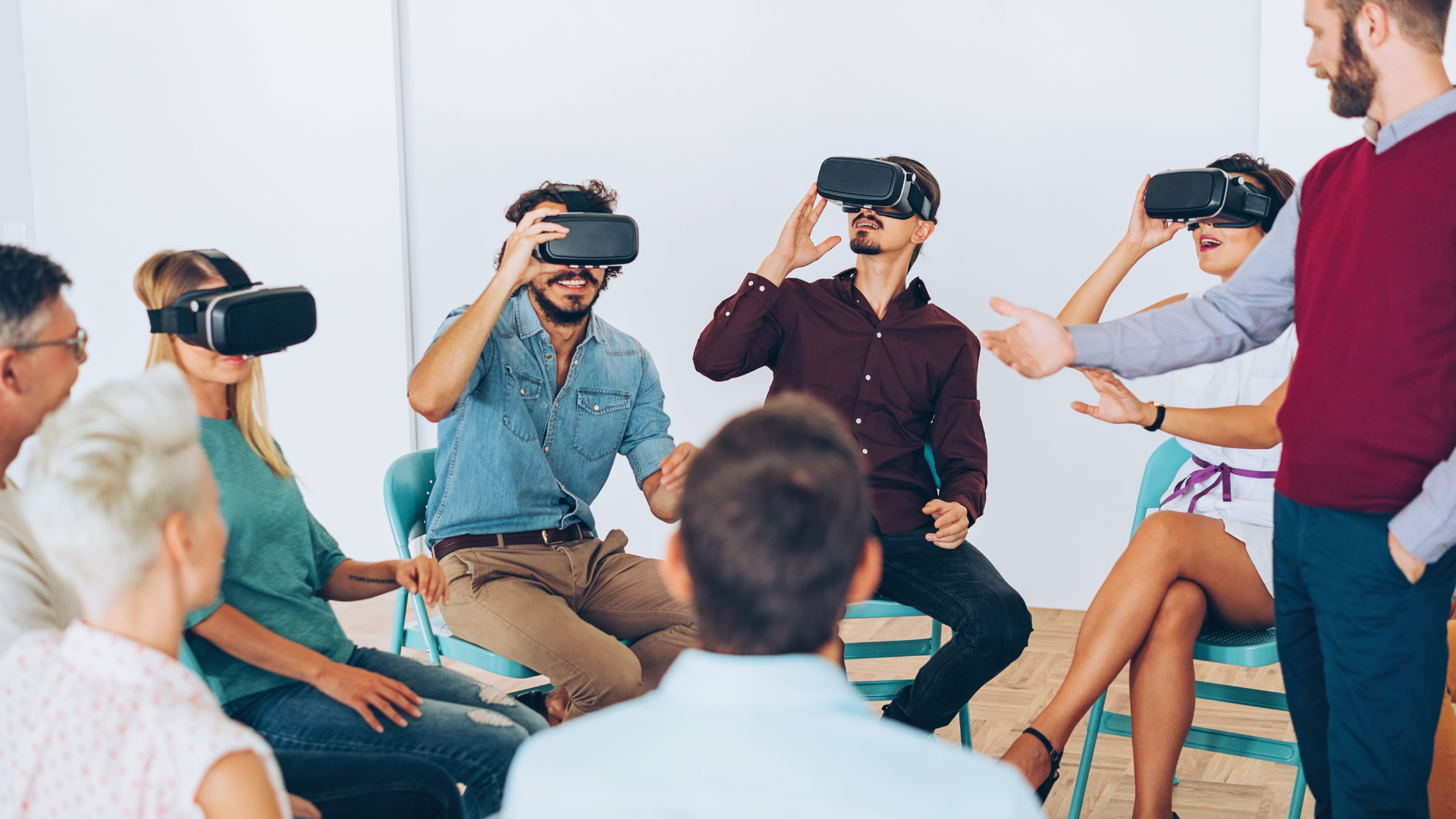
Virtual reality (VR) is transforming the landscape of training simulations across various industries. By providing immersive environments, VR allows trainees to practice skills in scenarios that closely resemble real-world situations. This technology enhances learning outcomes by promoting engagement and retention, enabling individuals to gain hands-on experience without the risks associated with traditional training methods.
From healthcare to aviation, organizations are utilizing VR to streamline their training processes. Medical professionals can perform virtual surgeries, while pilots can train in flight simulators that replicate challenging weather conditions. Each of these applications demonstrates how VR not only enhances skills but also builds confidence among trainees.
As industries continue to adopt innovative training methods, VR stands out for its ability to create safe, controlled environments where learners can make mistakes and learn from them. This approach not only prepares them for real-life challenges but also ensures higher competency levels upon entering the workforce.
Understanding VR in Training
Virtual reality (VR) plays a pivotal role in modern training environments, utilizing immersive technologies to create realistic simulations. This section explores the evolution of VR training methods and the key components that ensure effective learning experiences.
Evolution of VR Training Methods
VR training has progressed significantly since its inception. Early systems primarily employed basic graphics and limited interactivity, but recent advancements have integrated sophisticated immersive environments.
Organizations now utilize highly detailed simulations that replicate real-world scenarios. Industries such as healthcare, aviation, and military training leverage these methods for critical skills development. For instance, flight simulators allow pilots to practice without risk, while medical students can perform virtual surgeries.
Moreover, the integration of extended reality (XR) expands beyond VR to include augmented reality (AR) and mixed reality (MR). This evolution fosters more versatile training opportunities, enabling learners to acquire and refine skills safely and effectively.
Key Components of VR Training Systems
Effective VR training systems rely on several essential components. A head-mounted display (HMD) serves as the primary interface, immersing the user in a 3D environment. HMDs provide visual feedback that facilitates comprehension and retention of complex information.
Motion tracking technology enhances interactivity, allowing users to navigate through simulations naturally. By capturing physical movements, this technology creates a more intuitive experience. Responding accurately to user actions fosters engagement and accelerates learning.
Additionally, interactive software plays a crucial role in guiding users through training scenarios. This software often incorporates branching scenarios and assessments, providing immediate feedback to reinforce learning.
In summary, the combination of advanced hardware and innovative software is vital to the success of VR training systems.
Applications of VR in Real-world Training
VR technology offers immersive experiences that enhance learning outcomes across various fields. This section explores how VR is applied in healthcare, industrial safety, and military training simulations.
Healthcare Training Simulations
In healthcare, VR is transforming training through realistic simulations. Medical professionals can engage in scenarios like surgeries and emergency response without risking patient safety.
For example, a surgeon can practice a complex procedure repeatedly in a virtual environment. This repetition is crucial for skill refinement.
VR allows for real-time feedback, which enhances the learning experience. It also supports diverse learning styles, catering to visual and kinesthetic learners effectively. The immersive nature of these simulations helps retain information and improves overall performance in actual medical situations.
Industrial Safety Training
Industrial sectors are increasingly adopting VR for safety training. Workers can experience hazardous situations in a controlled environment, allowing them to practice responses to emergencies.
For instance, a construction worker might navigate a virtual site where they can encounter simulated accidents, such as equipment failure or falls.
Such training emphasizes safety protocols and decision-making under pressure. VR also provides measurable outcomes, assessing how individuals react to high-risk scenarios. This method enhances awareness and minimizes workplace incidents, promoting a safer working environment.
Military Training Scenarios
In the military, VR serves as a critical tool for training personnel in combat and strategic operations. Troops can participate in realistic battlefield simulations that replicate various terrains and combat situations.
Scenarios can include tactical maneuvers, threat identification, and coordination with team members. This level of immersion allows soldiers to develop essential skills without the risks associated with live exercises.
Virtual environments also enable adaptability, as situations can be modified to reflect real-world challenges. The feedback from these simulations is vital for improving tactical decisions and readiness in actual operations.
Impact of VR Training on Learning
Virtual reality training significantly influences learning processes through enhanced retention and the development of soft skills. By immersing learners in realistic scenarios, VR facilitates deeper engagement and application of knowledge.
Enhancing Learning Retention Through VR
VR training improves learning retention by creating immersive environments that stimulate engagement. The sense of presence experienced in virtual settings encourages learners to recall information more effectively when needed.
Studies indicate that individuals who undergo training in VR retain up to 75% more information compared to traditional methods. This retention is attributed to several factors:
- Active participation: Learners are more involved in VR scenarios, leading to better memory formation.
- Realistic context: The immersive nature of VR helps in applying knowledge in real-world situations.
- Immediate feedback: VR simulations provide instant responses, which reinforces learning.
The combination of these elements enhances their ability to remember information long-term.
Developing Soft Skills with Interactive VR
Interactive VR is crucial for developing soft skills, such as communication, teamwork, and problem-solving. Traditional training often lacks the dynamics required to practice these skills effectively.
By engaging in realistic role-playing situations, learners can:
- Experiment with different approaches: They can try various strategies without real-world consequences.
- Receive feedback in real-time: Immediate evaluation helps to refine skills and behaviors.
This modality enhances abilities while fostering a safe space for mistakes. Research shows that VR can enhance soft skill proficiency by 40%, making it a powerful tool for modern education.
Leave a Reply