
As businesses continue to embrace remote and hybrid work models in 2025, understanding cybersecurity risks for remote business operations has never been more critical. While the flexibility of working from anywhere offers undeniable benefits, it has simultaneously expanded the attack surface for cybercriminals. Organizations that fail to adapt their security posture to this distributed landscape risk devastating data breaches, ransomware attacks, and operational disruptions that could cost millions.
According to recent industry reports, cyberattacks targeting remote workers have increased by over 300% since the widespread adoption of remote work, with the average cost of a data breach now exceeding $4.45 million. This comprehensive guide examines the evolving threat landscape, identifies the most pressing vulnerabilities facing distributed teams, and provides actionable strategies to strengthen your organization’s cybersecurity defenses.
The Current State of Remote Work Cybersecurity in 2025
The remote work revolution has fundamentally transformed how organizations approach cybersecurity. What began as a temporary pandemic response has evolved into a permanent operational model for many businesses. Recent surveys indicate that approximately 58% of American workers now have the option to work remotely at least one day per week, with 35% working fully remote positions.
This shift has created unprecedented challenges for IT security teams. Traditional perimeter-based security models, designed for centralized office environments, have proven inadequate for protecting dispersed workforces. Cybercriminals have quickly adapted, developing sophisticated attack vectors specifically targeting remote workers who may lack the robust security infrastructure of corporate offices.
The consequences of inadequate remote work security are severe. Beyond financial losses, organizations face regulatory penalties, reputational damage, and loss of customer trust. Understanding these risks is the first step toward building a resilient security framework for distributed operations.
Top Cybersecurity Risks Facing Remote Workers
1. Phishing and Social Engineering Attacks
Phishing remains the most prevalent attack vector targeting remote employees. Cybercriminals exploit the isolation of remote workers through increasingly sophisticated social engineering tactics. These attacks often impersonate legitimate business communications, creating urgency around fake IT issues, payroll updates, or executive requests.
The rise of AI-powered phishing tools has made these attacks more convincing than ever. Attackers can now generate grammatically perfect emails that mimic internal communication styles, making detection significantly more challenging for even security-conscious employees.
2. Unsecured Home Networks
Unlike corporate offices with enterprise-grade firewalls and network monitoring, home networks typically rely on consumer-grade routers with default passwords and outdated firmware. These vulnerabilities provide easy entry points for attackers to intercept sensitive data or launch attacks on connected devices.
Many remote workers also use public Wi-Fi networks in coffee shops, libraries, or co-working spaces, exposing their devices to man-in-the-middle attacks and packet sniffing. Without proper VPN protection, every piece of data transmitted becomes vulnerable to interception.
3. Weak Authentication Practices
Password-related vulnerabilities continue to plague remote workforces. Employees often reuse passwords across multiple accounts, use weak combinations, or store credentials insecurely. The absence of physical security measures like badge access means stolen credentials provide immediate system access.
Multi-factor authentication (MFA) adoption has improved, but implementation gaps remain. Many organizations still rely on SMS-based verification, which is vulnerable to SIM swapping attacks, rather than more secure authenticator apps or hardware tokens.
4. Unmanaged Devices and Shadow IT
The bring-your-own-device (BYOD) trend has accelerated, with many employees using personal laptops, tablets, and smartphones for work purposes. These devices often lack proper security updates, endpoint protection, or encryption. When combined with unauthorized software installations—known as shadow IT—the security risk multiplies exponentially.
Personal devices frequently connect to insecure networks, contain outdated applications, and lack the visibility that IT departments require for effective security monitoring. This creates blind spots where malware can persist undetected for extended periods.
5. Cloud Service Vulnerabilities
Remote operations depend heavily on cloud-based collaboration tools, file storage, and productivity suites. While cloud providers implement robust security measures, misconfigurations remain a leading cause of data exposure. Default settings, excessive permissions, and inadequate access controls can leave sensitive information publicly accessible.
The rapid adoption of new collaboration tools without proper security vetting has created additional vulnerabilities. Employees may use unauthorized file-sharing services or communication platforms that lack enterprise-grade encryption and compliance certifications.
How Do Cybercriminals Target Remote Workers?
Understanding attacker methodologies helps organizations develop more effective defenses. Cybercriminals specifically exploit the unique characteristics of remote work environments through several sophisticated tactics.
Exploiting reduced oversight: Without the ability to visually verify colleague identities or physically confirm requests, remote workers are more susceptible to business email compromise (BEC) scams. Attackers impersonate executives requesting urgent wire transfers or sensitive data.
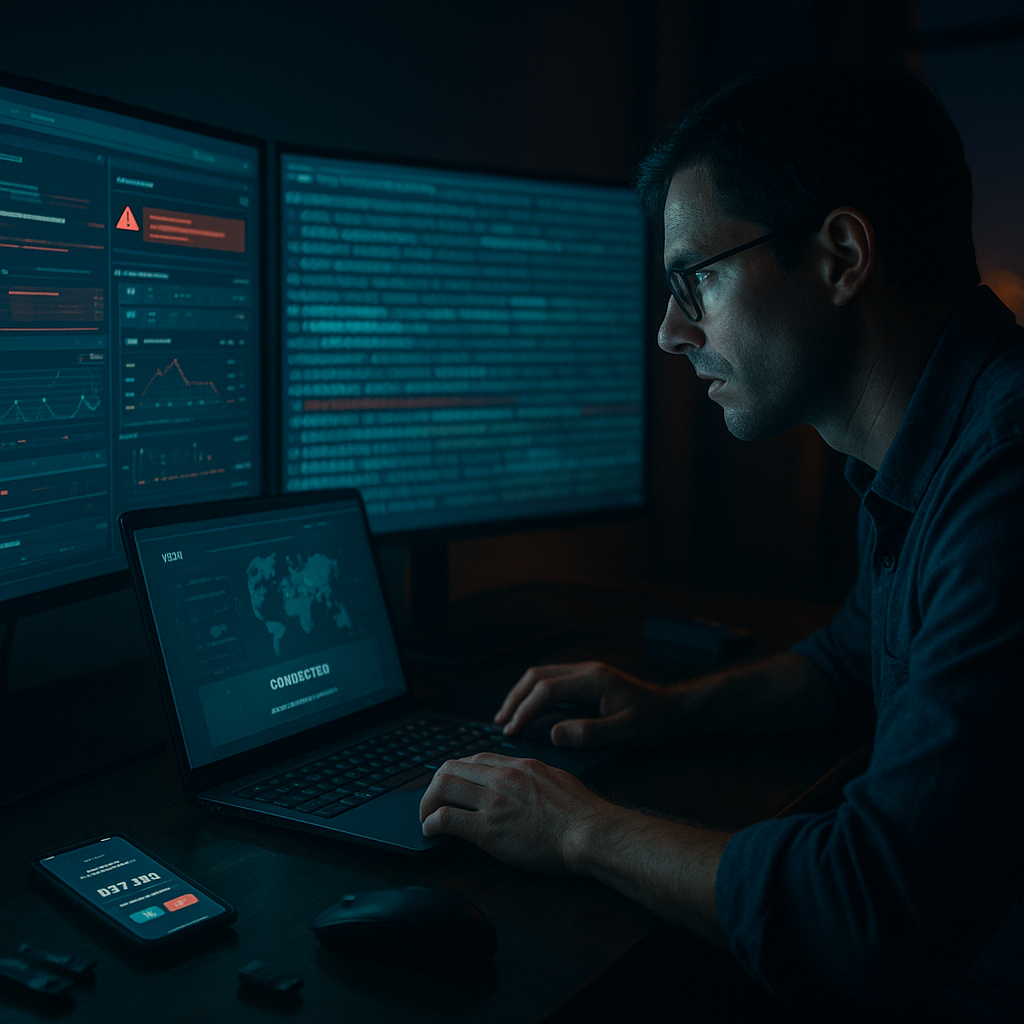
Targeting collaboration platforms: Video conferencing tools, instant messaging apps, and project management software have become prime targets. Attackers create fake meeting invitations containing malicious links or exploit vulnerabilities in outdated software versions. Organizations should prioritize streamlining communication with collaboration platforms that incorporate enterprise-grade security features and regular security updates.
Capitalizing on pandemic-related anxiety: Cybercriminals continue leveraging health concerns, economic uncertainty, and workplace changes to create emotional triggers that bypass rational security thinking. Fake health alerts, stimulus payment scams, and job offer fraud remain prevalent.
Deploying ransomware through remote access: Compromised remote desktop protocol (RDP) connections and VPN vulnerabilities provide direct pathways for ransomware deployment. Attackers can encrypt entire networks before detection, demanding substantial payments for decryption keys.
What Are the Best Practices for Securing Remote Business Operations?
Implementing comprehensive security measures requires a layered approach addressing technology, policies, and human factors. The following strategies represent current best practices for protecting distributed workforces.
Implement Zero Trust Architecture
Zero Trust security models operate on the principle of “never trust, always verify.” This approach requires continuous authentication and authorization for every user, device, and application attempting to access resources, regardless of location.
Key components include:
- Identity verification for all users and devices
- Least privilege access controls limiting permissions to essential functions
- Micro-segmentation to contain potential breaches
- Continuous monitoring and behavioral analytics
- Encryption of data in transit and at rest
Deploy Comprehensive Endpoint Protection
Every device accessing corporate resources requires robust security software including next-generation antivirus, endpoint detection and response (EDR) capabilities, and automated patch management. Solutions should provide:
- Real-time threat detection and response
- Device encryption for data protection
- Remote wipe capabilities for lost or stolen devices
- Application control to prevent unauthorized software
- Regular security updates and vulnerability patches
Strengthen Authentication and Access Management
Moving beyond basic passwords, organizations should implement:
- Phishing-resistant MFA: Hardware security keys or authenticator apps provide stronger protection than SMS codes
- Single sign-on (SSO): Reduces password fatigue while maintaining security through centralized authentication
- Privileged access management (PAM): Controls and monitors administrative access to critical systems
- Regular access reviews: Ensures employees retain only necessary permissions as roles change
Secure Network Connections
Protecting data transmission requires multiple safeguards:
- Mandatory VPN usage for all remote connections
- Secure Wi-Fi protocols (WPA3) with strong, unique passwords
- Network segmentation separating work and personal devices
- DNS filtering to block malicious websites
- Prohibition of public Wi-Fi for sensitive work activities
How Can Organizations Train Remote Employees on Cybersecurity?
Technology alone cannot prevent cyberattacks—human awareness remains the most critical defense layer. Effective security awareness training for remote workers should include:
Regular simulated phishing exercises: These tests help employees recognize suspicious emails in a safe environment, with immediate feedback and additional training for those who click malicious links.
Interactive training modules: Engaging content covering topics like password hygiene, safe browsing practices, and incident reporting procedures proves more effective than passive presentations. Training should also cover secure usage of software tools for remote teams, ensuring employees understand how to leverage these platforms without compromising security.
Clear security policies: Written guidelines covering acceptable use, data handling, incident response, and remote work requirements provide essential reference materials.
Security champions programs: Designating security advocates within each team creates peer support networks and encourages security-conscious behaviors.
Incident response drills: Regular exercises ensure employees know how to report suspected breaches and understand their roles in containment procedures.
What Regulatory and Compliance Considerations Apply to Remote Work?
Remote operations introduce complex compliance challenges, particularly for organizations handling sensitive data. Key regulatory frameworks requiring attention include:

GDPR and data privacy laws: Processing personal data from home environments requires ensuring adequate security measures and lawful basis for processing. Remote work may trigger cross-border data transfer requirements.
Industry-specific regulations: Healthcare organizations must maintain HIPAA compliance for remote access to protected health information. Financial institutions face SEC, FINRA, and PCI DSS requirements for securing customer data.
State privacy laws: Regulations like the California Consumer Privacy Act (CCPA) and Virginia Consumer Data Protection Act impose additional obligations for businesses handling resident data.
Contractual obligations: Client agreements often specify security requirements, audit rights, and breach notification procedures that must extend to remote work environments.
Organizations should conduct regular compliance assessments, document security measures, and maintain evidence of employee training to demonstrate due diligence in protecting sensitive information.
Emerging Threats and Future Considerations for 2025 and Beyond
The cybersecurity landscape continues evolving rapidly, with several emerging trends requiring attention:
AI-powered attacks: Threat actors increasingly leverage artificial intelligence to automate phishing campaigns, generate deepfake audio for social engineering, and identify vulnerabilities at scale. Defensive AI solutions are becoming essential for detection and response.
Quantum computing risks: While practical quantum attacks remain years away, organizations should begin preparing for post-quantum cryptography to protect long-lived sensitive data.
Supply chain vulnerabilities: Attacks targeting software vendors, managed service providers, and third-party integrations continue increasing. Rigorous vendor security assessments and software bill of materials (SBOM) requirements help mitigate these risks.
Insider threats: Economic pressures and workplace changes may increase malicious insider activity or unintentional data exposure. User behavior analytics and data loss prevention tools provide critical visibility.
Internet of Things (IoT) expansion: Smart home devices sharing networks with work equipment create additional attack vectors. Network segmentation and IoT-specific security policies become increasingly important.
Conclusion
Understanding cybersecurity risks for remote business operations in 2025 requires acknowledging that distributed workforces represent a permanent transformation, not a temporary adjustment. The threats facing remote workers—from sophisticated phishing campaigns to vulnerable home networks and cloud misconfigurations—demand comprehensive, layered security approaches.
Organizations that successfully navigate this landscape share common characteristics: they implement Zero Trust architectures, deploy robust endpoint protection, enforce strong authentication, and prioritize continuous employee education. They recognize that technology alone cannot solve security challenges—human awareness and organizational culture play equally critical roles.
As cyber threats continue evolving, maintaining vigilance and adaptability remains essential. Regular risk assessments, updated security policies, and investment in emerging defensive technologies will help organizations protect their distributed operations. By treating cybersecurity as an ongoing business priority rather than a one-time implementation, companies can confidently embrace the flexibility and productivity benefits of remote work while minimizing exposure to potentially devastating attacks.
The most successful organizations will be those that embed security consciousness into every aspect of remote operations, creating resilient defenses that protect data, maintain customer trust, and ensure business continuity in an increasingly distributed world.
Leave a Reply